28 May 2007

The Hamantaschen That Became Stars

Here's a 15-minute short film in three parts on my experience re-doing hamantaschen from the King Arthur Flour Cookie Companion. The dough didn't turn out to be pliable to fold into the traditional shapes, so I made cut cookies instead. Regardless, they were a huge hit.


Sorry to have had to cut them up into three clips, but at least there aren't any commercials!

23 May 2007

Delightfully Hearty Handfuls


These muffins are super hearty and heart-healthy. Uber-fiber-icious. Ok, they're pretty darn tasty, too. Best of all, they fit in the palm of your hand, so they're good to take camping, hiking and biking for quick energy.

For this recipe, I had a field day with a muffin recipe in "The Baker's Catalogue." My version is almost nothing like the original, with the exception of three ingredients: whole wheat flour, rolled oats and baking powder.

In my altered version, I used cashew butter in place of the butter or oil. I also used rice milk instead of cow's milk, agave for sugar, and loads more spices and add-ins.

If you decide to make these yourself, just know that they don't make big muffins at all. They're pretty dense, but very tasty.

Makes 12 handful-sized muffins.

Ingredients:

2 cups whole wheat flour
1/2 cup rolled oats
1/2 cup agave nectar
1/2 teaspoon salt
2 teaspoons baking powder
1 teaspoon cinnamon
1/2 teaspoon alspice
1/2 teaspoon nutmeg
1/2 teaspoon ginger
1/2 teaspoon ground cloves
1 teaspoon vanilla paste
1/2 cup chopped dried apricots
1/2 cup chopped dried pears
1 cup unsweetened carob chips
1 cup rice milk
1/2 cup cashew butter
3 large eggs

Directions

1. Preheat your oven to 400 degrees F. Lightly grease a 12-cup muffin pan.
2. Sift together all the dry ingredients except the rolled oats and the dried fruit. Mix in the rolled oats and the dried fruit.
3. In another bowl beat the eggs with the agave nectar, rice milk and cashew butter until smooth.
4. Add the wet ingredients to the dry and mix until incorporated. Let sit covered for 10 minutes before spooning into the muffin pan.
5. Bake for approximately 15 minutes, turning the pan after 10 minutes.
6. Let cool in the pan for a few minutes before transferring to a wire rack to cool completely before storing or enjoying!

20 May 2007

Product Review: Fruit-sweetened Ginger and Orange Marmalade


In the recipe for Hamantaschen below, I made two different fillings using fruit-sweetened spreads. This was not one of them. Not because it isn't tasty, because it is. I just didn't want to make a gingery filling for the hammys.

Now, on to the product review.

First, a little of this Ginger and Orange Marmalade goes a long way. I've never really been a fan of marmalade, except for a lemon marmalade I've used in chocolate fillings. But, this spread has convereted me. It's sweetened with the typical fruit juices, but the primary flavors are definitively orange and ginger. There are thin slices of orange rind, as you would find in most marmalades, but interestingly, they bite back like they've been marinated in ginger.

If I were to cook pork, which I don't, but I know some of you do, I would use this spread in a marinade for pork chops. I think it would be fantastic.

When I baked the hammys below, I had a bit of extra dough leftover. With the excess dough, I made simple cut-out cookies that I topped with the marmalade to a very tasty result. I also used miniature tart pans, lined with the cookie dough and filled with the marmalade. Those were delicious as well.

So, to rank this product on a scale of 1-10, I would give it a very high 9. Why not 10? The price! Bottles of St. Dalfour aren't cheap, but in the case of their Ginger and Orange Marmalade, it's worth the investment, especially if you have to avoid sugar-sweetened jams and preserves.

15 May 2007

Moosey Hamantaschen


I've written and tested hamantaschen recipes before, but had yet to achieve the buttery crispness found in the bakery cookies I ate in my youth. That is, until I tried altering the Sundays at Moosewood Restaurant hamantaschen recipe for agave nectar.

The cookies shown above are the result of my efforts. I made these while cooking another recipe, so I didn't make one of my short films about the experience. However, I can tell you that I only used half the recipe and made about 24 tasty cookies.

My alterations to the recipe included 1/2 cup coconut flour for part of the all-purpose flour called, 1 cup of agave for the sugar, 2 teaspoons pineapple juice for the orange juice, and a completely different set of fillings.

For the fillings, I used a base of chopped dried tart cherries and dried apricots. I hydrated these and drained them, then pureed them. I divided the puree in half, then mixed each with a different fruit-sweetened mixed fruit spread, respectively. One was a peach spread, while the other was this amazing concoction from Trader Joe's with pomegranate in it.

Both were wonderful foils for the buttery cookie. However, I plan to try this recipe again, substituting more coconut flour for the ap flour and using a poppyseed filling. I've had a bag of Pensey's poppyseeds in my cabinet for a few months mocking me. So, it's time to use them.

Just a tip for creaming butter with agave, make sure that the butter's softened to almost mush. It incorporates much better that way, and even gets to a nice, fluffy consistency quite easily with the stand mixer.

12 May 2007

The Vegan Dulce de Leche Trials


Because this is a test recipe and not yet "proven," I'm not going to publish the ingredients and amounts. However, I can tell you that it's very close. Not bad for the very first try!

My friend Judie came by yesterday, and she (being game for trying most anything I concoct in the kitchen) gave it a go. Judie really liked it, even the burnt caramel end note. She ate spoonfuls of the stuff straight. She also proposed making a sandwich of the dulce de leche with cashew butter. My reply was "Anything tastes better with cashew butter," which got me to thinking...

09 May 2007

Experimental Dulce de Leche

This is just a quick update to let you know that I've been noodling around with a new recipe for vegan, agave nectar-based dulce de leche. The first try was very close. I made a short movie about it that I'm editing and will post soon.

Making dulce de leche from scratch is extremely time consuming, especially if you don't use sweetened condensed milk. Same goes for rice milk, which is the base of my recipe.

All this tinkering in the kitchen makes me wish I studied harder during high school chemistry.

04 May 2007

Coconut Apricot Almond Biscotti

The name is a bit of a misnomer since these cookies are much more apricotty and almondy than coconutty. And, feel free to change the name if you make this version your own. I've altered this recipe before on my other blog, Here and There, but this is a very different take on it. Instead of adding carob powder to offset the liquid sweetener, I've added coconut flour. Additionally, the dried apricots lend the cookies a great tartness to offset the richness of the almonds.

I've never worked with coconut flour before, but I definitely will again. It smells fantastic, is very low in fat, and is very high in fiber. What could be bad? Also, it really sucks up the liquid in a recipe, so I could actually replace flour with it instead of adding to a recipe. It might just be my answer to how to tackle the sugar cookie issue.

I've made a little film of how I made the biscotti. Please let me know what you think. The recipe follows the film, although in the film, I use one egg. I've corrected for dryness by adding the second egg back in the recipe below.


Yields at least 30 cookies, depending on how thickly you slice them.

Ingredients:

1 1/2 cups toasted almonds coarsely chopped
3/4 cup agave nectar
2 cups self-rising flour
1/2 cup coconut flour
2 eggs
1 teaspoon vanilla paste
4 tablespoons vanilla rice milk (you could use regular, soy or almond milk here as well)
1/2 cup dried apricots chopped

Directions:

1. Preheat oven to 325 degrees F. Line a cookie sheet with parchment paper.
2. In a food processor, grind 1/2 cup of the almonds and the agave nectar until it resembles a wet paste.
3. Add the paste to the bowl of your mixer and beat in the flours until combined well.
4. Add the eggs and vanilla and mix until a dough forms.
5. Add the rice milk and mix until the dough loosens (about 2 minutes).
6. Add the remaining almonds and the apricots and stir until incorporated.
7. Halve the dough and on a flat surface, roll each piece into a log at least 10 in. long and about 2 in. in diameter. Pat down the logs a bit so they're oblong rather than round.
8. Bake until golden brown and set, approximately 27 minutes. Place the pan on a rack to cool for 10 minutes.
9. Move the logs to a cutting surface and slice each into 1/2 in. to 1 in. pieces, depending on your preference.
10. Place the slices cut side down on the pan and bake for another 10 minutes.
11. Take the pan out of the oven and turn over the biscotti before putting the pan back into the oven to bake for another 10 minutes.
12. Cool completely on the pan, on a rack.
13. Enjoy the biscotti by themselves, or in my favorite way, by dunking them into a cold or hot drink.

29 April 2007

Carob Fudge


Sometimes I really do miss chocolate. I have fond memories of walking along the boardwalk at the New Jersey shore, inhaling the flavors of the freshly made fudge. I could never decide which was my favorite flavor, so I'd usually spend a little bit more for a variety box. Sweet, creamy, chocolaty stuff that eventually made me sick with a monster headache after I'd finished a few pieces.

Still, I miss the flavor and the consistency of fudge. Of course, there are plenty of companies offering malitol-laden fudge, but that also has awful consequences for me. I won't divulge details here, but suffice it to say that the packages of "sugar-free" sweets with sugar alcohols are labeled as hazardous for a reason.

To develop a fudgy candy that wouldn't have icky and/or painful consequences (even in small amounts), I stepped into the kitchen and experimented. My intention was to make carob fudge. As you can see from the photo above, I got pretty close. Because there's only the dairy included with the carob chips, it's not a creamy-tasting concoction. And, it's a bit more chewy than I'd like for "true" fudge, but it's really close. I'll be experimenting again, especially with different add-ins and alternate proportions of the base ingredients, so you'll see other incarnations of carob fudge in the future.

I deviated from my usual sweetener, agave nectar, and used barley malt. I'll probably try it with agave next time. Which is not to say the barley malt was bad at all, because it wasn't. It just didn't achieve the sweetness profile I was going for in the recipe. I tried it here because I've had it in health food store-bought confections that were really tasty, and thought I could wing it.

Because this recipe yields 15 pretty large pieces, it will be a while before I try my hand at carob fudge again. It's rich stuff, so I can only tolerate a piece a day. Give me a month or so, and I'll be back at it.

Experimental Carob Fudge I


Ingredients:

2 cups unsweetened carob chips
1/2 cup barley malt
3 teaspoons grapeseed oil
1/2 cup unsweetened dried coconut
3 tablespoons carob powder

Directions:

1. Grease an 8-in. square pan.
2. In the top part of a double boiler (or in a glass bowl over simmering water), melt the chips, barley malt and oil. Stir continuously until the mixture is smooth.
3. Mix in coconut and carob powder until well blended.
4. Press into pan and refrigerate until just set.
5. Let the pan come back to room temperature (1 hr) and cut into 15 pieces.

26 April 2007

Inspiration

I recently finished reading My Life in France by Julia Child and Alex Prud'Homme. I'm so glad that I read it now, as I'm in the process of writing my first cookbook (the inspiration for this blog).

Written in the first person, My Life in France provides an incredibly candid view of Julia's exhaustive research into the recipes of her first cookbook and how they would translate from French kitchens to American households. I could hear her voice, that unique voice of hers, in my head as I read about how she and her husband Paul traveled extensively and literally ate life up as they went.

Her descriptions of life in her kitchens (in each of her French apartments), cooking numerous French dishes for the first time and tasting remarkable flavors dished out by other fine chefs are nothing short of inspiring for a writer. I was even more enthused as I learned how exacting an editor she was. As both a writer and an editor, reading My Life in France gave me hope that I really can do this -- even if it takes as long as ten years, like Julia's first book did.

I have many favorite books, but I think that this one tops my list at the moment. And, it's not even a cookbook.

23 April 2007

Making Over Martha's Brownies


Oh Martha! How I wish I could make all the lovely cookies and yummy desserts in your Baking Handbook! Alas, I cannot. It's so hard to alter true butter cookies to suit a liquid sweetener like agave nectar. It will be a happy day for me when a dried agave product comes on the market.

But, thankfully, Martha's "Fudgy Chocolate Brownie" recipe follows a common model for brownies -- melt butter and chocolate together and add the remaining ingredients in stages before baking. I've made quite a few agave-and-carob-laden brownies, but this recipe required the most amount of (ehem) fudging.

The result is a very fudgy brownie with a nice crust. It definitely goes well with a nice glass of vanilla rice milk.

Here's the recipe with my alterations:

Fudgy Carob Brownies

Ingredients:

6 tablespoons unsalted butter
1 cup unsweetened carob chips
1 cup agave nectar
1 teaspoon vanilla paste
3 large eggs
3/4 cup all-purpose flour
1/2 teaspoon salt

Directions:

1. Preheat oven to 325 degrees F. Butter 8-in square baking pan.
2. Boil 2 in. of water in a medium saucepan and turn off the heat. Place the butter and the carob in a glass bowl on top of the steaming saucepan, and stir until the butter and carob are completely melted together and smooth.
3. Take the bowl off the hot water and let cool for 15 minutes.
4. Stir the agave nectar into the mixture until combined.
5. Whisk in the vanilla.
6. Whisk in the eggs until well combined.
7. Gently fold in the flour and salt.
8. Pour the batter into the pan and bake approximately 40 minutes, until a toothpick tester comes out with a few moist crumbs.
9. Let cool, then cut into 16 2-in squares.

Performance note: When using agave to make brownies, do not expect to achieve the cracked top of the typical brownie. It just won't happen. It might be a bit on the soft side, so feel free to make a tasty carob ganache to pour on top!

20 April 2007

Better Graham Crackers


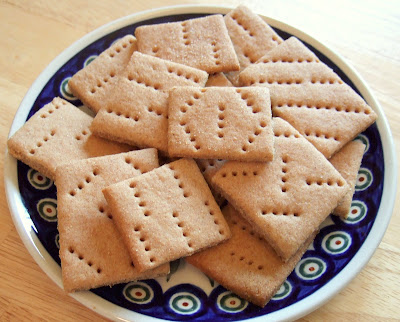
Almost a year ago, I tried altering another graham cracker recipe that just didn't fly for my husband John (I, however, enjoyed them immensely). Since I've been collecting other graham cracker recipes to try and other cookbooks since that first attempt, I decided it's time to try again.

This recipe comes from the King Arthur Flour Cookie Companion, a great resource for wonderful cookies. I had to make some big substitutions for the recipe to work with agave nectar, but the outcome was a graham cracker that more closely matched John's idea of what one should taste like.

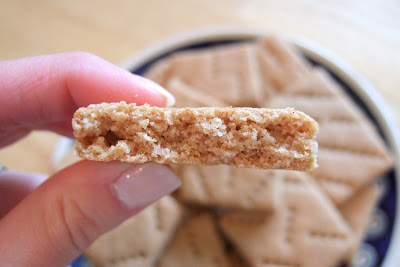
One note of caution, though. I baked these for the prescribed time, but found that their texture was much more like a cookie than a cracker. A day later, I re-baked a few of them in the toaster oven for about 15 minutes, and achieved an ideal cracker consistency. Ideal for me. Not for John, he liked the "cookier" ones better. C'est la vie!


Better Graham Crackers

Ingredients:

1/2 cup all-purpose flour
1 1/2 cups whole wheat flour
1/2 cup agave nectar
1 teaspoon baking powder
1/2 teaspoon salt
1 teaspoon cinnamon
1/2 cup (1 stick) unsalted butter

Directions:

1. Preheat the oven to 300 degrees F. Line two baking sheets with parchment paper or grease lightly.
2. In a medium bowl sift together the dry ingredients.
3. Using a pastry blender, cut the butter into the dry mixture until it is evenly crumbly.
4. Slowly add the agave nectar, mixing it in using a fork.
5. Turn the dough out onto a floured surface and fold it over gently until smooth. [I also used the pie-crust-making technique of using the ball of my hand to mush the butter into the dough further. It really makes a difference in the final product.]
6. Divide the dough in half and on one of the pieces of parchment paper from the baking sheets, roll one piece into a large rectangle, 1/16th in. thick.
7. Use a pizza cutter to cut crackers 2 in. wide x 3 in. long. Don't separate the crackers.
8. Use a dough docker or a straight fork to prick a design into the dough to keep it from puffing up irregularly.
9. Transfer the sheet of parchment paper with the dough to one of the baking sheets.
10. Do the same with the other half of the dough.
11. Bake the crackers for 20-25 minutes, or until they are medium golden brown.
12. Remove them from the oven and let them cool on the baking sheet for 10 minutes.
13. Gently break the crackers on the cut lines and gently transfer them to a rack to cool completely.
14. Enjoy!

A Lovely, Cakey Banana Bread, And a New Product Review


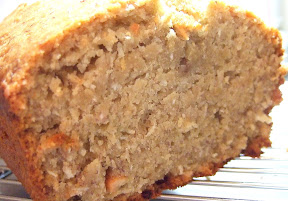
This rich banana bread recipe is much more like a cake than a quick bread. I greatly altered the original recipe I found in Mark Bittman's How to Cook Everything, but like all the recipes I've chosen from that book and altered to suit my restrictions, it worked like a charm. Bittman said that the key to the success of his original is the coconut, "although the butter helps too." Sure it does, Bittman. There's a STICK of butter in that 9 x 5 in. pan!

So, saying it's rich (although I made it richer yet) is pretty much an understatement. But it's so tasty! I wouldn't even put anything on it, exept maybe a simple coconut frosting. I'd be willing to try it in minimuffin pans as tiny banana coconut cupcakes in another try.

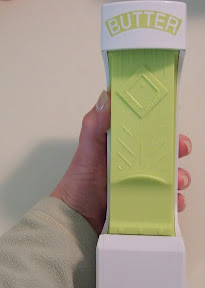
Below is the recipe, followed by a review of the One-Click Butter Cutter that I used while making Bittman's Banana Bread.

Banana Bread

Ingredients:

8 tablespoons (1 stick) of unsalted butter
1 1/2 cups all-purpose flour
1/2 cup whole wheat flour
1 teaspoon salt
1 1/2 teaspoons baking powder
2/3 cup agave nectar
2 egg yolks
3 very ripe bananas
1 teaspoon vanilla paste
1/2 cup dry roasted cashews
1/2 cup grated unsweetened coconut

Directions:

1. Preheat the oven to 325 degrees F and grease a 9 x 5 in. loaf pan.
2. Sift and combine the dry ingredients.
3. Cream the butter and beat in the eggs and bananas.
4. Stir the butter mixture into the dry ingredients until just blended.
5. Stir in the vanilla, then the nuts, then the coconut until just blended.
6. Pour the batter into the loaf pan and bake for approximately 50 minutes. A toothpick should come out with a few moist crumbs.
7. Cool on a rack for 15 minutes until removing from the pan and cooling on the rack until completely cooled.
8. Enjoy!

While I was making this recipe, I tried out the One-Click Butter Cutter.
Here are three very short clips showing how I used the Butter Cutter and what I thought of it.


Welcome to Altered Plates!

Thank you very much for visiting Altered Plates. The mission of this blog is to share with you my experiences altering recipes to meet my various dietary restrictions. I hope you'll enjoy the journey!